
THE ESSENTIALS
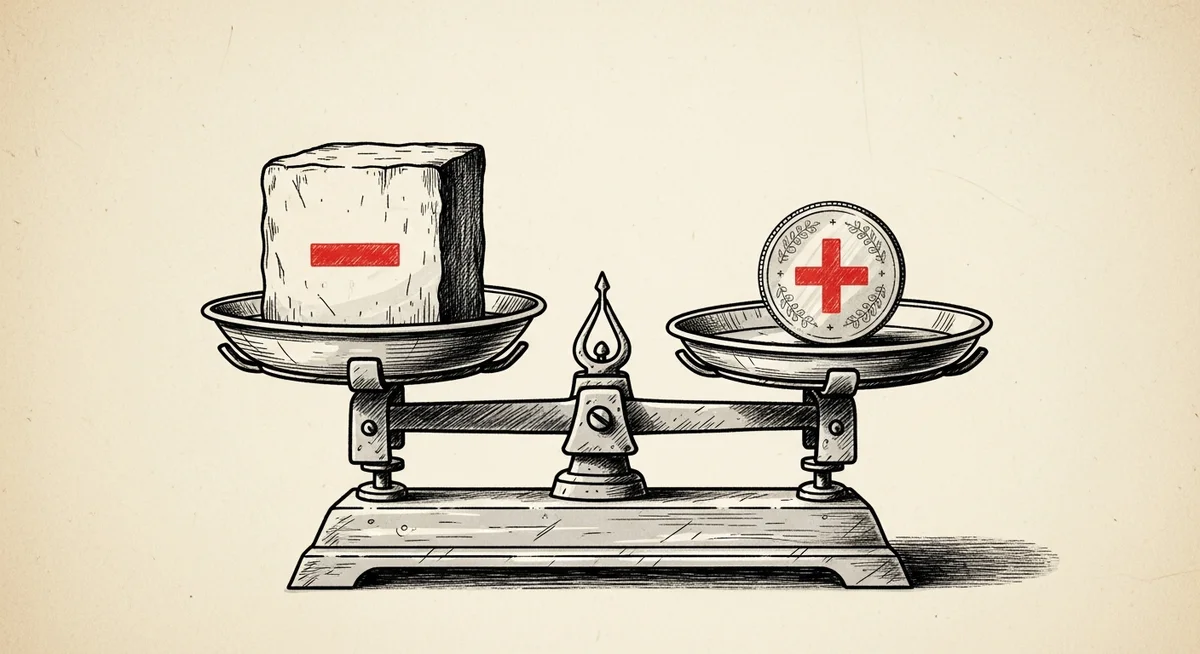
Plus and minus signs serve as mathematical operators in sports betting, indicating both the favored side and the relative payout ratio based on a baseline of 100.
- Minus (-) signs identify the favorite, showing the exact amount of capital required to secure a $100 net profit.
- Plus (+) signs designate the underdog, showing the potential net profit returned on a successful $100 wager.
- These indicators scale proportionally to any stake size, meaning a $10 bet at +200 odds returns $20 profit.
The total return always includes the initial risk capital, which is returned by the bookmaker alongside any winnings.
At a Glance: Reading Plus and Minus Odds
Understanding these symbols is crucial for calculating risk. The entire American odds system revolves around a standardized index to help players compare value across different markets.
- Minus (-): High probability, lower payout. Players must risk a larger sum to win a smaller profit.
- Plus (+): Low probability, higher payout. Players risk a smaller sum to win a larger profit.
- proportional scaling: Wager payouts scale linearly. A $50 bet at +150 returns $75 profit.
- Standard base: All ratios are indexed to $100, but there is no requirement to wager exactly $100.
What Does Plus/Minus Mean in Betting?
The plus and minus signs act as mathematical shorthand to define the relationship between your risk and your potential reward. These symbols indicate whether you are backing the outcome that the bookmaker deems more likely (the favorite) or less likely (the underdog). By using this uniform indexing system, sportsbooks display how much liquidity is required to secure a specific return.
According to educational resources from The Odds Desk, this system helps players quickly assess risk across different leagues. Whether analyzing baseball, basketball, or soccer, the system scales mathematically to any budget. The numbers themselves are not direct forecasts, but rather reflections of market demand and bookmaker calculations.
The Plus Sign (+): The Underdog and Potential Winnings
The plus sign designates the underdog, representing the outcome that is statistically less likely to occur. Because this outcome carries a higher risk of losing, the bookmaker incentivizes players by offering a larger payout relative to the stake. The number following the plus sign is the exact net profit you receive if you place a successful $100 wager.
For example, if an underdog is priced at +180, a winning $100 bet returns $180 in net profit. Your total payout from the cashier would be $280, which includes your original $100 stake. If you bet $10 instead, your profit scales proportionally to $18, plus your $10 stake back.
The Minus Sign (-): The Favorite and Required Risk
The minus sign identifies the favorite, representing the outcome that has a higher implied probability of winning. Because the risk of losing is lower, you must risk a larger sum of money to generate a specific profit. The number following the minus sign indicates how much cash you must wager to win exactly $100 in net profit.
If a team is priced at -150, you must wager $150 to yield a net profit of $100. If the bet wins, you receive your $150 stake back plus the $100 in profit, totaling $250. For smaller budgets, a $15 bet on a -150 favorite returns $10 in profit, plus the $15 stake.
How Plus/Minus Works Across Different Bet Types
The plus and minus notation applies to almost every standard wagering market. While the math behind the payouts remains identical, the symbols serve different functional roles depending on the bet type. Understanding these roles helps you navigate moneylines, point spreads, and totals without confusion.
Moneyline Betting: Betting on Who Will Win
A moneyline bet is a straightforward wager on which competitor or team will win the match outright. There are no point handicaps or complex conditions, only the direct outcome of the game. The plus and minus signs indicate the payout ratio for each side based on their perceived strength.
- The Favorite (-): Requires a larger financial commitment to secure a profit because they are expected to win.
- The Underdog (+): Yields a higher return on a smaller wager because they face a tougher path to victory.
- Even Money (+100): Occurs when two sides are deemed perfectly equal, meaning a $100 bet returns exactly $100 in profit.
Point Spread Betting: Betting on the Margin of Victory
In point spread betting, the plus and minus signs serve a dual purpose. They indicate both the virtual handicap applied to the team’s final score and the financial price of placing the bet. The handicap is designed to level the playing field between unequal competitors.
- Minus Spread (e.g., -7): The favorite must win the game by more than 7 points for the bet to pay out.
- Plus Spread (e.g., +7): The underdog can either win the game outright or lose by fewer than 7 points for the bet to win.
- The Price (e.g., -110): The smaller plus or minus number next to the spread indicates the cost of the bet, typically requiring a $110 wager to win $100.
Totals (Over/Under) and Prop Bets
Totals and proposition bets also rely on the plus/minus framework to price outcomes. In a totals market, the bookmaker sets a benchmark for the combined score of both teams, and you bet on whether the actual score will be over or under that number. Each option is assigned a price, which is usually around -110 on both sides.
Proposition bets, or props, focus on individual player performances or specific game events, such as whether a player will score a touchdown. These highly specific outcomes can feature extreme odds, ranging from heavy favorites at -300 to long-shot underdogs at +500. Regardless of the market complexity, the payout calculations remain anchored to the same $100 baseline.
Is It Better to Bet on Plus (+) or Minus (-) Odds?
There is no mathematical superiority to betting on plus odds over minus odds, as both carry unique risk-to-reward profiles. Betting on favorites (minus odds) offers a higher probability of winning individual tickets but requires risking more capital. Conversely, betting on underdogs (plus odds) offers larger payouts but results in a lower overall win rate.
Data from the BeGambleAware campaign emphasizes that sportsbooks build a mathematical fee into all odds, meaning neither side is structured to guarantee long-term profits. Successful sports betting relies on identifying value, which occurs when the probability of an outcome is higher than the price suggests. It is vital to set strict deposit limits and manage your bankroll carefully, regardless of whether you prefer backing favorites or underdogs.
How to Calculate Payouts and Implied Probability
To evaluate whether a wager is worth the risk, you should calculate both the potential payout and the implied probability. Implied probability represents the mathematical likelihood of an event occurring as dictated by the bookmaker’s odds. Converting American odds into these metrics allows you to compare prices across different formats.
The table below outlines the payout rates and implied winning probabilities for common plus and minus odds profiles:
| Odds Format | Required Stake | Net Profit | Total Return | Implied Probability |
|---|---|---|---|---|
| -200 | $200.00 | $100.00 | $300.00 | 66.7% |
| -110 | $110.00 | $100.00 | $210.00 | 52.4% |
| +100 | $100.00 | $100.00 | $200.00 | 50.0% |
| +150 | $100.00 | $150.00 | $250.00 | 40.0% |
| +300 | $100.00 | $300.00 | $400.00 | 25.0% |
To calculate the implied probability for minus odds, use the formula: Odds / (Odds + 100). For plus odds, the formula is: 100 / (Odds + 100). For details on regulatory standards, consult our legal notice page.
Understanding the “Vig” or “Juice” (Why −110 Is Standard)
When you look at a balanced point spread, you will notice that both sides are typically priced at -110 rather than +100. This 10 point difference is the “vig” or “juice,” which is the commission the sportsbook charges for taking your bet. If a bookmaker takes equal action on both sides of a game, they guarantee themselves a profit regardless of the outcome.
A study published by the UK Gambling Commission highlights how these structural margins ensure the house maintains a long-term advantage. At -110 odds, you must win 52.38% of your bets just to break even over time. This built-in fee is why sports betting should never be viewed as a reliable source of income or a financial strategy.
To learn more about how our platform handles user data during these educational breakdowns, see our privacy policy.
FAQ: Common Plus/Minus Betting Questions
What does −110 mean?
A price of -110 means you must risk $110 to win $100 in net profit. This is the industry standard price for point spreads and totals, incorporating a 4.54% house edge. It requires the bettor to risk slightly more than they stand to gain on the play.
What does +200 mean?
A price of +200 means a winning $100 wager will generate $200 in net profit. This represents a 2-to-1 payout ratio, which corresponds to an implied probability of 33.3% for the underdog. If the bet wins, you walk away with a total payout of $300.
Can plus and minus signs flip during live betting?
Yes, live betting markets are dynamic and update continuously as the game progresses. If a pre-game favorite falls behind early, their odds may shift from a minus to a plus as their probability of winning drops. Conversely, an underdog that takes a substantial lead can quickly become a minus favorite.
Do parlays change how plus/minus works?
Parlays do not change the fundamental meaning of plus and minus signs, but they compound the odds mathematically. The individual odds of each selection, or “leg,” are converted to decimal format and multiplied together to produce a single payout rate. This compounding effect creates a much larger plus price, reflecting the significantly lower probability of winning all legs.